integrated Master's Degree in
veterinary medicine
Sofia
Duarte, DVM PhD
Course Coordinator
Sofia
Duarte, DVM PhD
Course Coordinator
Integrated Master’s Degree in Veterinary Medicine (MIMV) is designed to ensure the development of Day One Skills, which are essential for professional practice. From the 2nd year onwards, students participate in supervised integrated practices, which allow them to apply the knowledge they have acquired in a real-life context. The study plan combines theoretical and practical classes in a dynamic and interactive way, linking clinical, laboratory and industrial content. In the 11th semester, the curricular internship and dissertation — which may take the form of a scientific article — consolidate technical and scientific training, preparing veterinary doctors to work in various areas of the profession or pursue advanced specialisation.

5,5 years
(11 semesters)

105 Admissions

ETCS 330

Schedule Daytime

Portuguese, English, French
Request more information about the Integrated Master’s Degree in Veterinary Medicine.
Discover all the details about the Integrated Master’s Degree in Veterinary Medicine, including the study plan, career opportunities, admission requirements and course structure.
Fill out the form to download the brochure and learn more about the programme.
1. Entry requirements
Institutional Access:
Specific Exams:
- 02 Biology and Geology (50%)
or
- 02 Biology and Geology (30%) + one of the following:
- 07 Physics and Chemistry (20%)
- 16 Mathematics (20%)
- 18 Portuguese (20%)
- 06 Philosophy (20%)
Grade of the lowest-ranked student in 2025/2026:
1st Round
Top-ranked applicant: 176.7
Last admitted applicant: 131.1
2nd Round
Top-ranked applicant: 144.6
Last admitted applicant: 121.3
3rd Round
Top-ranked applicant: 148.2
Last admitted applicant: 125.6
Calculation of application score:
Secondary School Average: 50% + Specific Exam scores: 50%
Prerequisite:
Completion of Group A form – Interpersonal Communication
2. Career Opportunities
The skills conferred by structured theoretical knowledge and extensive hands-on practical experience, guaranteed by the curriculum, enable the training of highly qualified veterinary surgeons who are prepared for professional practice in the main areas of activity and work of veterinary medicine professionals:
Clinical
Research
Biotechnology and Industry
Diagnostics
Animal Nutrition and Production
Pharmaceutical and Veterinary Industr
Teaching and Scientific Research
Food Inspection and Safety
Animal Welfare and Veterinary Ethics
Veterinary Public Health and Sanitation
Conservation and Wildlife
International Organisations and NGOs
3. Curriculum Plan
| Code | Curricular Units – 1st semester | Scientific Area | ECTS |
|---|---|---|---|
| 02101140 | Anatomy and Function of the Systems I | FS | 5,5 |
| 02101155 | Biophysics | FS | 3,5 |
| 02100189 | Cellular and Molecular Biology | FS | 5,0 |
| 02100040 | Biochemistry I | FS | 5,0 |
| 02101166 | Personal and Professional Skills I | FS | 1,0 |
| 02101177 | General Physiology | FS | 4,0 |
| 02101188 | General Histology and Cytology | FS | 5,0 |
| 02100122 | History of Veterinary Medicine | FS | 1,0 |
| Code | Curricular Units – 2nd semester | Scientific Area | ECTS | |
|---|---|---|---|---|
| 02100088 |
| FS | 2,5 | |
| 02101199 |
| FS | 6,0 | |
| 02101200 |
| FS | 5,0 | |
| 02101211 |
| FS | 6,5 | |
| 02101222 |
| FS | 2,0 | |
| 02100099 | Biochemistry II | FS | 5,0 | |
| 02101233 | Personal and Professional Skills II | FS | 1,0 | |
| 02101244 | Interdisciplinary Project | FS | 2,0 |
| Code | Curricular Units – 3rd semester | Scientific Area | ECTS |
|---|---|---|---|
| 02101211 | Anatomy and Function of the Systems VI | FS | 3,0 |
| 02100034 | Biomathematics | FS | 3,5 |
| 02101267 | Personal and Professional Skills III | FS | 1,0 |
| 02100133 | Exognosia and Animal Identification | FS | 4,0 |
| 02101278 | Genetics | FS | 4,5 |
| 02100210 | Imunology | FS | 5,0 |
| 02100296 | Microbiology I | FS | 4,5 |
| 02100303 | Parasitology I | CS | 4,5 |
| Code | Curricular Units – 4th semester | Scientific Area | ECTS |
|---|---|---|---|
| 02101289 | Anatomy and Function of the Systems VII | FS | 4,0 |
| 02101295 | Animal Behaviour and Welfare | FS | 2,0 |
| 02101304 | Animal Handling | AP | 1,5 |
| 02101310 | Microbiology II | FS | 4,0 |
| 02101321 | Animal Nutrition | AP | 4,0 |
| 02101379 | Parasitology II | CS | 4,0 |
| 02101385 | General Pathology | CS | 5,0 |
| 02100257 | Integrated Veterinary Practice I | O | 5,5 |
| Code | Curricular Units – 5th semester | Scientific Area | ECTS |
|---|---|---|---|
| 02100221 | Anatomical Pathology I | CS | 5,0 |
| 02101396 | Personal and Professional Skills IV | FS | 1,0 |
| 02100243 | Epidemiology | FS | 4,0 |
| 02101403 | Pharmacology and Therapeutics I | FS | 5,5 |
| 02101414 | Principles of Economics and Applied Management | AP | 2,5 |
| 02101420 | Surgical Semiology and Operative Techniques | CS | 4,5 |
| 02100314 | Medical Semiology I | CS | 5,5 |
| 02101431 | Animal Production Systems I | AP | 2,0 |
| Code | Curricular Units – 6th semester | Scientific Area | ECTS |
|---|---|---|---|
| 02100268 | Anatomical Pathology II | CS | 5,0 |
| 02101442 | Anaesthesiology and Analgesia | CS | 4,5 |
| 02100397 | Pharmacology and Therapeutics II | FS | 4,5 |
| 02101458 | Food Hygiene and Safety | AH | 2,5 |
| 02100320 | Integrated Veterinary Practice II | O | 5,5 |
| 02100424 | Medical Semiology III | CS | 5,5 |
| 02101469 | Animal Production Systems II | AP | 2,5 |
| Code | Curricular Units – 7th semester | Scientific Area | ECTS |
|---|---|---|---|
| 02101475 | Animal Conservation and Breeding | AP | 3,0 |
| 02101486 | Clinical Imagiology I | CS | 3,0 |
| 02101497 | Companion Animal Internal Medicine I | CS | 4,0 |
| 02101505 | Livestock Species Internal Medicine | CS | 4,0 |
| 02101516 | Companion Animals Surgical Pathology | CS | 4,5 |
| 02100358 | Pathology and Clinics of Infectious Diseases I | CS | 4,0 |
| 02101527 | Pathology and Clinics of Parasitic Diseases II | CS | 3,5 |
| 02100476 | Applied Toxicology | CS | 4,0 |
| Code | Curricular Units – 8th Semester | Scientific Area | ECTS |
|---|---|---|---|
| 02100498 | Clinical Imagiology II | CS | 3,0 |
| 02101538 | Companion Animal Internal Medicine II | CS | 3,5 |
| 02101549 | Equine Internal Medicine and Surgery | CS | 4,0 |
| 02101551 | Livestock Species Surgical Pathology | CS | 4,5 |
| 02100517 | Pathology and Clinics of Infectious Diseases II | CC | 3,5 |
| 02100528 | PPathology and Clinics of Parasitic Diseases II | CS | 3,5 |
| 02100561 | Integrated Veterinary Practice III | O | 5,5 |
| 02100465 | Veterinary Public Health | CS | 2,5 |
| Code | Curricular Units – 9th semester | Scientific Area | ECTS |
|---|---|---|---|
| 02101562 | Livestock Species Clinics I | CS | 5,0 |
| 02101573 | Equine Clinics | CS | 4,0 |
| 02101584 | Companion Animals Clinics I | CS | 5,0 |
| 02100594 | Sanitary Inspection I | AH | 4,5 |
| 02100618 | Technology and Safety in Food of Animal Origin I | AH | 4,5 |
| 02101590 | Theriogenology I | CS | 4,0 |
| ———- | Optional I | OP | 3,0 |
| Code | Curricular Units – Optionals 9th semester | Scientific Area | ECTS |
|---|---|---|---|
| 02101661 | Animal Welfare Assessment in Swine and Poultry | AP | 3,0 |
| 02100770 | Conservation of Autochthonous Wild Fauna | CS | 3,0 |
| 02101672 | Experimental Design and Data Analysis | FS | 3,0 |
| 02101683 | Nano-Based Diagnostics in Veterinary Science | CS | 3,0 |
| 02100646 | Medical Emergency and Intensive Care | CS | 3,0 |
| 02100430 | Clinical Ethology of Companion Animals | CS | 3,0 |
| 02101343 | Feline Medicine | CS | 3,0 |
| 02101694 | Equine Medicine | CS | 3,0 |
| 02100654 | Veterinary Dentistry | CS | 3,0 |
| 02100635 | Alternative and Complementary Medicine | CS | 3,0 |
| 02101707 | Companion Animal Ophthalmology | CS | 3,0 |
| 02101332 | Planning and Project of Livestock Facilities | AP | 3,0 |
| Code | Curricular Units – 10th semester | Scientific Area | ECTS |
|---|---|---|---|
| 02101606 | Livestock Species Clinics II | CS | 4,5 |
| 02101617 | Companion Animals Clinics II | CS | 4,5 |
| 02101628 | Sanitary Inspection II | AH | 4,0 |
| 02101639 | Clinical Nutrition | CS | 1,5 |
| 02100753 | Integrated Veterinary Practice IV | O | 5,5 |
| 02101645 | Technology and Safety in Food of Animal Origin II | AH | 4,0 |
| 02101650 | Theriogenology II | CS | 3,0 |
| ———- | Optional II | OP | 3,0 |
| Code | Curricular Units – Optionals 10th semeste | Scientific Area | ECTS |
|---|---|---|---|
| 02101718 | Animal Welfare Assessments in Ruminants and Equids | AP | 3,0 |
| 02101357 | Clinic and Surgery of New Companion and Wild Animals | CS | 3,0 |
| 02100671 | Human Capital Management | O | 3,0 |
| 02100441 | Physiotherapy and Rehabilitation | CS | 3,0 |
| 02101729 | Avian Immunology and Disease | FS | 3,0 |
| 02101735 | Artificial Intelligence in Veterinary Medicine | O | 3,0 |
| 02100781 | Introduction to Aquaculture | CS | 3,0 |
| 02100459 | Veterinary Regenerative Medicine | CS | 3,0 |
| 02101746 | Literature Review Methods | FS | 3,0 |
| 02101368 | Clinical Oncology | CS | 3,0 |
| 02101754 | Food Safety and Sustainability | AH | 3,0 |
| Code | Curricular Units – Optionals 10th semester | Scientific Area | ECTS |
|---|---|---|---|
| 02100764 | Curricular Internship | O | 30,0 |
4. Learning Objetives
- Train veterinary surgeons with solid scientific and practical training, able to start their professional activity with competence and responsibility.
- Develop clinical, laboratory and research experience in small and large animals, public health, animal production and food safety.
- Integrate the One Health concept, promoting the link between animal, human and environmental health.
- Training aligned with the objectives and quality standards defined by European Union Directive 2005/36/EC, which establishes the profile and minimum skills required for a veterinary surgeon to practise veterinary medicine, and by the EAEVE.
5. Teaching and Learning Methodologies
- Theory–Practice Integration
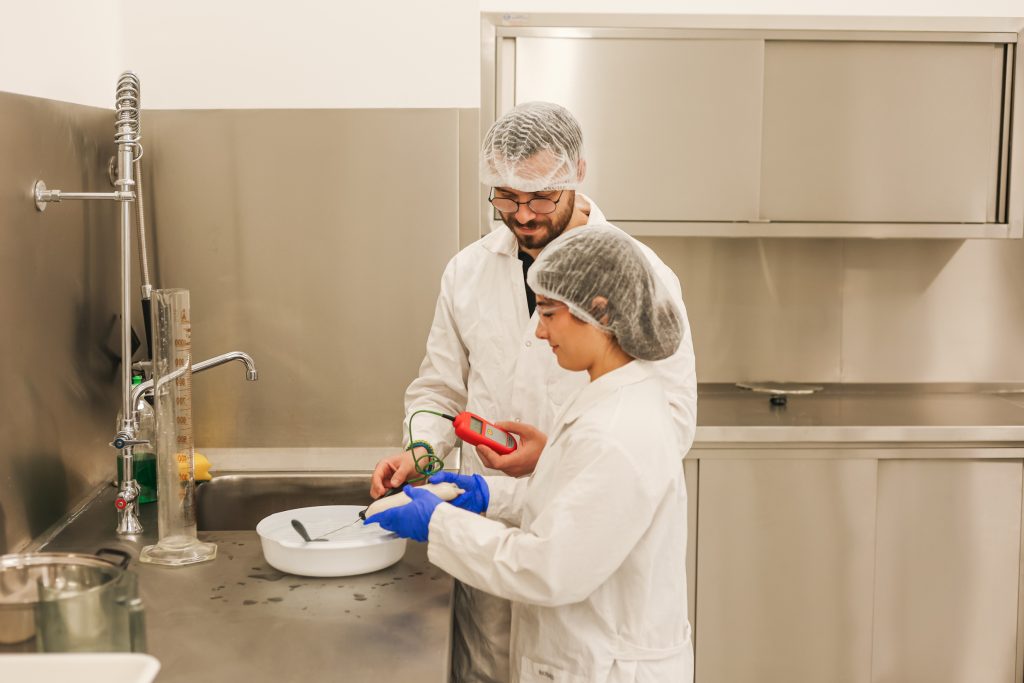
Combination of a solid scientific education with practical activities, whenever possible on-site and hands-on, promoting the application of knowledge in real-world contexts.
- Contact with Research and Development (R&D)
Involvement of students in research and development activities, supported by a network of institutional partnerships.
- Dynamic and Interactive Teaching
Theoretical and practical sessions delivered in a participatory manner, encouraging critical understanding of scientific concepts.
- Adaptation to Different Learning Styles
Flexible methodologies that consider the diversity of learning paces and styles, with close guidance and continuous interaction between instructors and students.
- Continuous Integration of Theoretical and Practical Content
Ensuring that theoretical principles are reinforced through their application in concrete practical situations.
- Monitoring and Continuous Improvement
Regular evaluation of the effectiveness of teaching methodologies through pedagogical surveys, semester reports, coordination meetings, and oversight by the Course Council and the Pedagogical Council, promoting identification of best practices and continuous improvement of the teaching–learning process.
6. Learning Assessment
Conducted in accordance with the learning objectives of each curricular unit (CU).
Considers the three dimensions of knowledge:
- Knowing (cognitive)
- Knowing how to do (psychomotor)
- Knowing how to be (socio-affective)
Each Curricular Unit Sheet (CUS) is periodically reviewed by the management of the Department of Veterinary Sciences (DVS), with training in pedagogical practices and knowledge assessment.
It aims to ensure continuous alignment between content and assessment instruments.
The process is aligned with the methodology used to monitor teaching methodologies.
7. Employability
- High Employability Rate
Over 94% of MIMV graduates were employed after completing the program, reflecting strong professional integration into the veterinary market.
- Rapid Professional Placement
Most graduates secured employment a few months after completing their studies.
- Diversity of Veterinary Roles
Graduates work in various areas of Veterinary Medicine, such as companion animal clinics, livestock production, and equine care, demonstrating the program’s ability to prepare students for different sectors of the profession.
- Value of Training from EUVG
Graduates attribute high importance to the education received at EUVG for professional performance, highlighting the program’s contribution to their preparation and employability — an indicator that the master’s degree is relevant and appreciated by both employers and professionals.
- Graduate Survey Results
8. National Accreditations & Records
National Classification of Education and Training Area: 640 Veterinary Sciences
Código: 9847
Acreditação de Ciclos de Estudos | A3ES
Legal Order
Validity of accreditation: 6 years from 31/07/2021
Maximum number of admissions: 30
Qualification level: 7
Degree: Master
Candidate Member of the European Association of Establishments for Veterinary Education (EAEVE), currently in the accreditation process
9. Investment
945€/month (english option)
Tutition and Fees HERE (scroll down for english)
TESTIMONIALS
What Our Alumni Say
I am very proud to have been a student at EUVG, a university of mutual support and dedication, where all colleagues, professors, and staff contributed to my training as a Veterinary Doctor and as a person.
Luís Louro, Veterinary Medicine Alumni
After completing Agricultural Engineering at ESAC, I joined EUVG with the long-held dream of studying Veterinary Medicine. From the very beginning, it was a choice as bold as it was right. Today, I look back and think it was well worth the effort and dedication.
José Campos, Veterinary Medicine Alumni
GET MORE
INFORMATION
Fill in the form to download the brochure and learn more about this programme.
the confirmation
that Euvg is the
ideal choice:
- Practice-oriented teaching
- High employability rate
- Modern facilities and state-of-the-art laboratories
- Strong links to the market and partner institutions
- A welcoming, close-knit academic environment
- Opportunities for research and innovation