Welcome to EUVG!
The origins of Vasco da Gama University School (EUVG) lie in the establishment of its founding entity, on 30 December 1997, the Vasco da Gama Cognitive Association (ACVG) It began operating in 2000 with two areas of activity: Higher Education and Professional Training.
In terms of Higher Education, it began its activity in the areas of Veterinary Medicine, Architecture and Landscape Architecture. However, as the project matured, it established itself in the field of Veterinary Science education, combining solid academic training with a strong practical component.
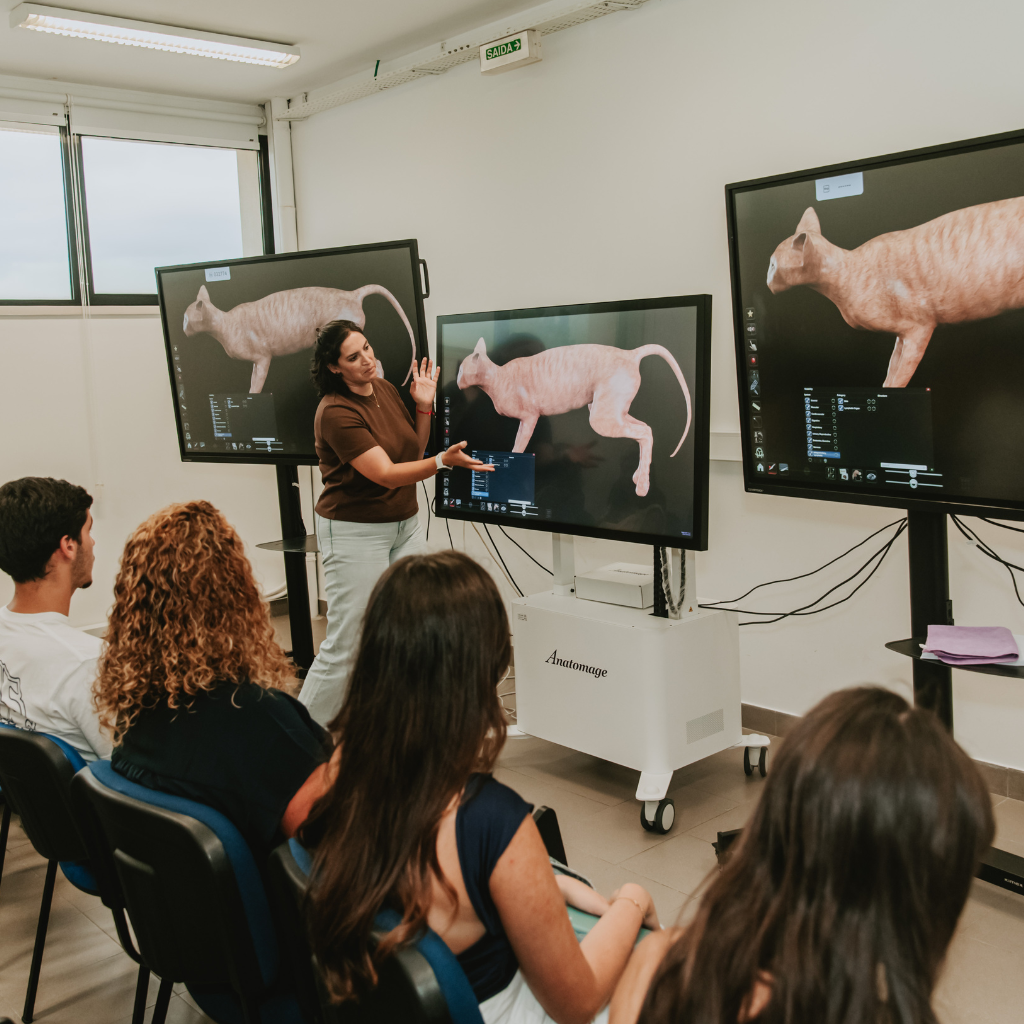
It invested in modern facilities on the Lordemão Campus – laboratories and specialised spaces, amphitheatres, Large Animal Hospital, Companion Animal Hospital, etc. – and consolidated partnerships with institutions and companies, offering students a training path in line with the demands of the market and society
EUVG also stands out for being a Multicultural Campus as its courses are attended by students from a wide range of backgrounds and nationalities, thus exporting knowledge to the world.
WHY EUVG?
EUVG stands out for its integration of training, research and innovation, adopting distinctive and innovative teaching practices with a strong practical component, which prepare its graduates for an increasingly specialised and competitive job market. By following principles of innovation, scientific rigour, interdisciplinary collaboration and promoting animal health ahd welfare, EUVG trains professionals in areas that are essential to the balance of ecosystems, encompassing human, animal and environmental health, thus adopting the One Health concept.
This approach allows EUVG not only to train veterinary technicians and doctors, but also professionals capable of leading research projects, contributing to public health policies and actively participating in the preservation of ecosystems and animal welfare, while always maintaining an ethical, responsible and socially committed vision.
Courses
Institutional Information
ETHICS
The EUVG Ethics Committee (EC) is an independent advisory body whose role is to analyse issues related to research, teaching, intellectual property, interaction with society and the functioning of the EUVG, ensuring compliance with ethical and legal principles.
Our mission is to protect and guarantee the integrity of human beings and non-human animals in laboratory, teaching and research activities, as well as due respect for cadavers or biological material originating from human beings or non-human animals, by analysing and reflecting on topics involving ethical and bioethical issues
FAQ
1. What are the responsibilities of the CE-EUVG?
- It issues ethical assessment opinions on research and development or educational projects;
- It issues reports, recommendations and other documents, on its own initiative or upon request, on ethical issues related to EUVG activities;
- It prepares discussion papers on general bioethical issues;
- It collaborates with other relevant entities in the field of ethics and bioethics with a view to sharing best practices;
- It promotes training activities on issues related to ethics and bioethics within the institution;
- Analyses issues that raise ethical problems that may be of general interest to the EUVG or to university life;
- Keeps a confidential record of opinions and decisions taken for at least five (5) years.
- Other powers are set out in the CE-EUVG Regulations
2. What does the Ethics Committee not do?
- Analyse requests for opinions relating to research projects or work, or other matters, to be carried out in institutions that have their own Ethics Committee;
- Issue opinions that fall within the scope of the Animal Welfare Body (ORBEA), in accordance with its current operating regulations.
3. Who can submit a request for an opinion to the Ethics Committee?
- Any professional from the institution, within the scope of their activity;
- The EUVG bodies and the management of the founding entity;
- Veterinary medical centres and other providers of outpatient veterinary medical and/or production medicine services that, in partnership with the institution, perform training or pedagogical and scientific development functions;
- Tutors or producers registered with the EUVG and/or its founding entity
4. Who should submit a request for an opinion to the Ethics Committee in order to carry out scientific or educational work?
- In general, all work that involves, in any way, people, personal data, animals or biological material of animal or human origin, and that raises ethical issues, namely:
- Research projects involving human beings;
- Research involving the collection and processing of sensitive data (e.g. ethnicity, religious beliefs, political opinions, sexual orientation, health-related data, biometric data, etc.);
- Research on human biological samples, human embryos/foetuses and/or human genetic material;
- Research involving safety, health and environmental risks;
- Research involving the processing of genetic data;
- Research involving local resources (e.g. genetic, animal, plant, etc.) in developing countries;
- Use of animals or biological samples in research projects;
- Research with potential for dual use or misuse or abuse
5. Who does not need to submit a request for an opinion to the Ethics Committee in order to carry out scientific or educational work?
- Scientific/educational studies that only use data already available in public databases;
- Scientific/educational projects that have been approved by another Ethics Committee associated with a Research Entity allocated to the project must send the relevant documentation to the CE-EUVG, as well as the respective opinion of that Ethics Committee, by email to etica@euvg.pt.
6. How do you submit a request for an opinion to the Ethics Committee?
1º –Ensure that the study complies with the Code of Ethical Conduct in Research.
2º – Complete the submission form and, where applicable, the Declaration of Compliance and Informed Consent and send them to etica@euvg.pt, putting in the SUBJECT line Ethics_name of PI_name of study_dd.mm.yyyy (date of submission)
7. How long does it take for the Ethics Committee to respond to a request for an opinion?
The EC has 30 days to issue its ethical opinion. If approval is conditional and any documents need to be adjusted, it has a further 30 days, so it is advisable to submit requests for opinions 60 days before the deadline for submitting documentation.
8. What response can I expect to my request for an ethical opinion?
The EC’s opinion may be favourable, unfavourable, or additional clarification may be requested, which must be submitted within a maximum of ten working days. After this period, the process will have to be restarted.
ORBEA
The EUVG Animal Welfare Body (ORBEA) is an independent advisory body created to monitor the breeding and use of animals in scientific research and educational activities, to promote animal welfare , issue opinions, and ensure ethical compliance and adherence to animal welfare rules in research and teaching carried out at the Vasco da Gama University School, in accordance with current legislation.
Responsabilities
ORBEA is responsible for issuing opinions and recommendations on ethical issues and compliance with animal welfare rules in breeding, research, teaching and university extension services; to issue opinions on projects or any procedures involving animal experimentation in research, teaching and university extension services; and to mediate the process of obtaining licences for projects involving animals from the DGAV.
Student Ombudsman
Appointments are made in advance by:
1. What is the Ombudsman's mission?
According to the Legal Framework for Higher Education Institutions (RJIES) and the terms of Article 9(1) of the EUVG Statutes, the main objective of the Student Ombudsman is to defend the rights and interests of EUVG students, ensuring that their rights are observed in relations between EUVG and students, in accordance with the terms established by law, statutes and regulations.
2. When does the Ombudsman intervene?
O Provedor atua sempre que tem conhecimento de situações que possam prejudicar os Estudantes, seja:
- Por comunicação direta dos próprios Estudantes (individual ou coletiva);
- Por iniciativa própria;
- Ou através de qualquer outro meio credível.
Nesses casos, procura soluções justas através do diálogo, mediação e negociação informal.
3. What can the Ombudsman do?
- Recommend improvements to the services of EUVG and its Founding Entity;
- Promote awareness among students of their rights;
- Encourage the active participation of students in improving the institution;
- Alert academic bodies to situations that need to be correct
4. What does the Ombudsman not do?
The Student Ombudsman has no:
- Administrative functions;
- Deliberative functions;
- Executive functions;
- Disciplinary functions.
NOTE: The Ombudsman’s intervention does not suspend any legal or regulatory deadlines that are currently in force
5. Why is it important?
The Student Ombudsman is an ally of students, helping them to:
- Ensure a high-quality, efficient and respectful academic service;
- Give voice to their concerns;
- Create a culture of dialogue and continuous improvement at EUVG
Campus
- Academic Departments
- ACVG Management
- Accounting
- Classrooms C
- Library
- Auditorium 1, 2, 3, 4, and 5
- Classrooms B
- Bar/Canteen
- Teachers' Offices
- Reprographics
- Classrooms A
- Laboratories
- Auditorium
- Veterinary University Hospital
- Academic Departments
- ACVG Management
- Accounting
- Classrooms C
- Library
- Auditorium 1, 2, 3, 4, and 5
- Classrooms B
- Bar/Canteen
- Teachers' Offices
- Reprographics
- Classrooms A
- Laboratories
- Auditorium
- Veterinary University Hospital
How to get to the EUVG Campus?
TESTIMONIALS
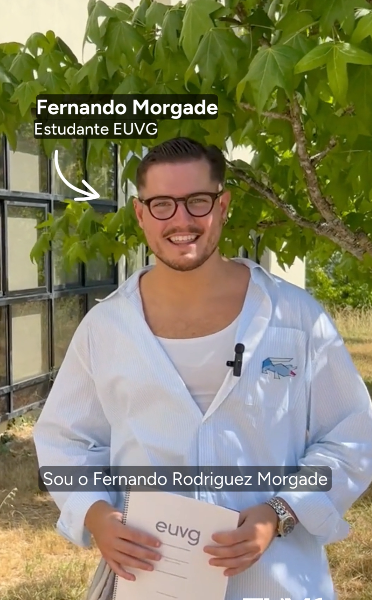
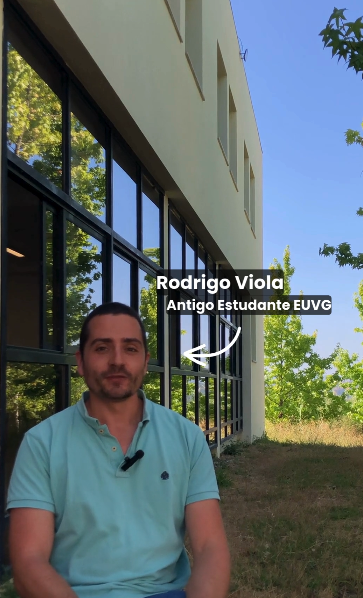
What Our Students Say