Welcome to EUVG!

The origins of Vasco da Gama University School (EUVG) lie in the establishment of its founding entity, on 30 December 1997, the  Vasco da Gama Cognitive Association (ACVG)  It began operating in 2000 with two areas of activity: Higher Education and Professional Training.  

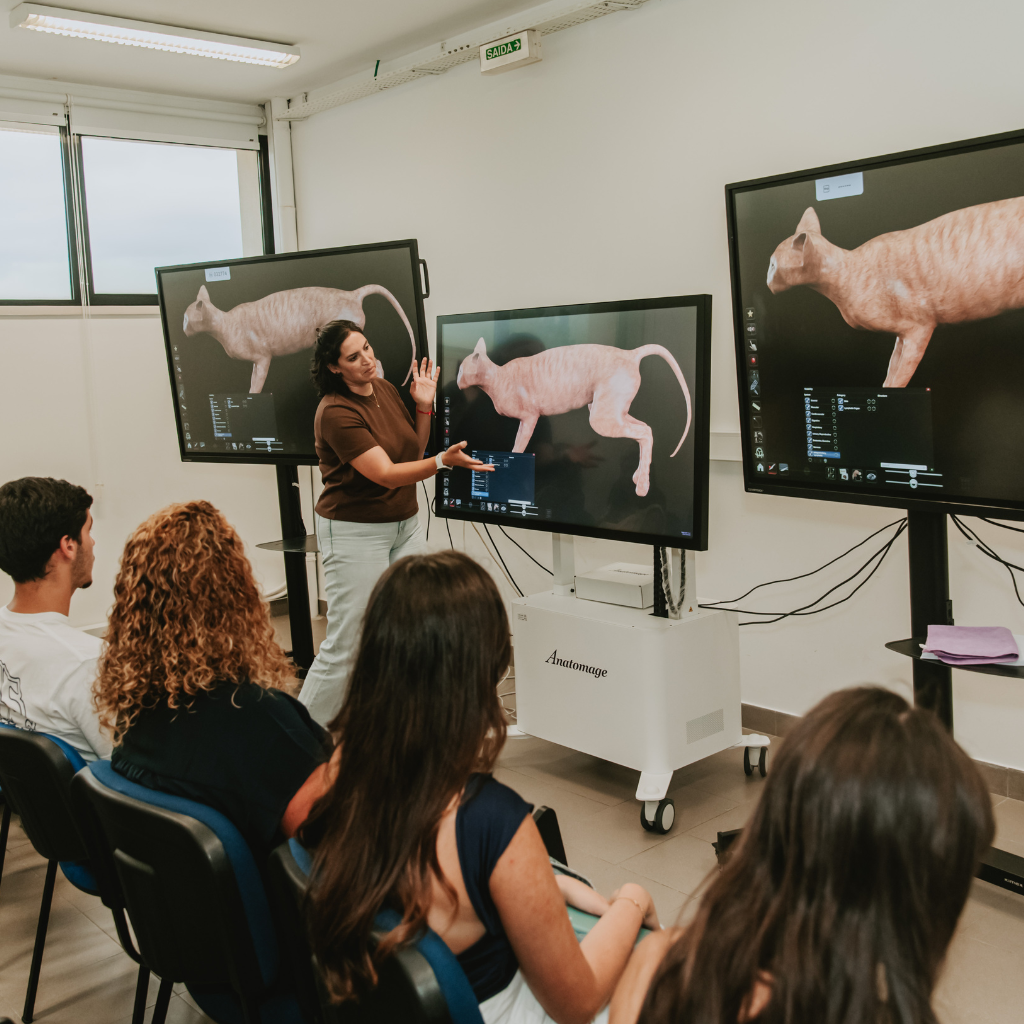
In terms of Higher Education, it began its activity in the areas of Veterinary Medicine, Architecture and Landscape Architecture. However, as the project matured, it established itself in the field of Veterinary Science education, combining solid academic training with a strong practical component. 

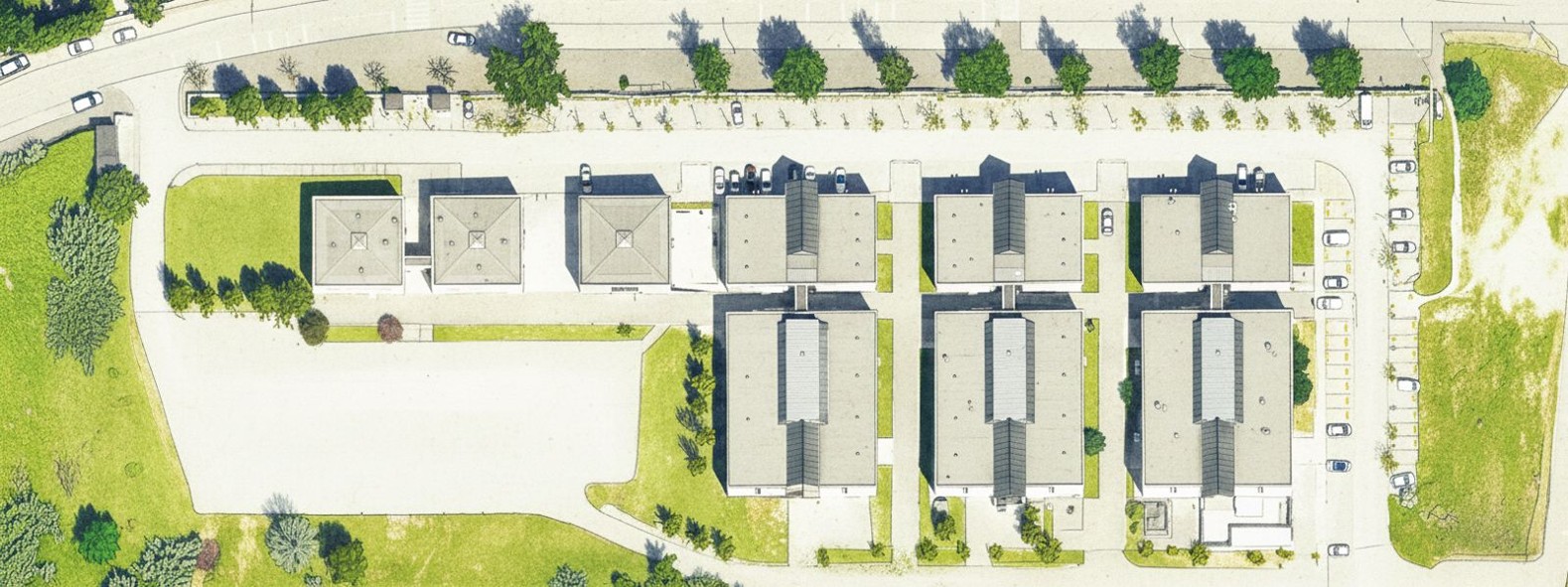
It invested in modern facilities on the Lordemão Campus – laboratories and specialised spaces, amphitheatres, Large Animal Hospital, Companion Animal Hospital, etc. – and consolidated partnerships with institutions and companies, offering students a training path in line with the demands of the market and society

EUVG also stands out for being a Multicultural Campus as its courses are attended by students from a wide range of backgrounds and nationalities, thus exporting knowledge to the world.

WHY EUVG?

EUVG stands out for its integration of training, research and innovation, adopting distinctive and innovative teaching practices with a strong practical component, which prepare its graduates for an increasingly specialised and competitive job market. By following principles of innovation, scientific rigour, interdisciplinary collaboration and promoting animal health ahd welfare, EUVG trains professionals in areas that are essential to the balance of ecosystems, encompassing human, animal and environmental health, thus adopting the One Health concept.

This approach allows EUVG not only to train veterinary technicians and doctors, but also professionals capable of leading research projects, contributing to public health policies and actively participating in the preservation of ecosystems and animal welfare, while always maintaining an ethical, responsible and socially committed vision.

Courses

Bachelor’s Degree in Bio-veterinary Sciences

Bachelor’s Degree in Marine Health and Wellfare

ETHICS

The EUVG Ethics Committee (EC) is an independent advisory body whose role is to analyse issues related to research, teaching, intellectual property, interaction with society and the functioning of the EUVG, ensuring compliance with ethical and legal principles.

Our mission is to protect and guarantee the integrity of human beings and non-human animals in laboratory, teaching and research activities, as well as due respect for cadavers or biological material originating from human beings or non-human animals, by analysing and reflecting on topics involving ethical and bioethical issues
FAQ

1. What are the responsibilities of the CE-EUVG?
  • It issues ethical assessment opinions on research and development or educational projects;
  • It issues reports, recommendations and other documents, on its own initiative or upon request, on ethical issues related to EUVG activities;
  • It prepares discussion papers on general bioethical issues;
  • It collaborates with other relevant entities in the field of ethics and bioethics with a view to sharing best practices;
  • It promotes training activities on issues related to ethics and bioethics within the institution;
  • Analyses issues that raise ethical problems that may be of general interest to the EUVG or to university life;
  • Keeps a confidential record of opinions and decisions taken for at least five (5) years.
  • Other powers are set out in the CE-EUVG Regulations
  • Analyse requests for opinions relating to research projects or work, or other matters, to be carried out in institutions that have their own Ethics Committee;
  • Issue opinions that fall within the scope of the Animal Welfare Body (ORBEA), in accordance with its current operating regulations.
  • Any professional from the institution, within the scope of their activity;
  • The EUVG bodies and the management of the founding entity;
  • Veterinary medical centres and other providers of outpatient veterinary medical and/or production medicine services that, in partnership with the institution, perform training or pedagogical and scientific development functions;
  • Tutors or producers registered with the EUVG and/or its founding entity
  • In general, all work that involves, in any way, people, personal data, animals or biological material of animal or human origin, and that raises ethical issues, namely:
  • Research projects involving human beings;
  • Research involving the collection and processing of sensitive data (e.g. ethnicity, religious beliefs, political opinions, sexual orientation, health-related data, biometric data, etc.);
  • Research on human biological samples, human embryos/foetuses and/or human genetic material;
  • Research involving safety, health and environmental risks;
  • Research involving the processing of genetic data;
  • Research involving local resources (e.g. genetic, animal, plant, etc.) in developing countries;
  • Use of animals or biological samples in research projects;
  • Research with potential for dual use or misuse or abuse
  • Scientific/educational studies that only use data already available in public databases;
  • Scientific/educational projects that have been approved by another Ethics Committee associated with a Research Entity allocated to the project must send the relevant documentation to the CE-EUVG, as well as the respective opinion of that Ethics Committee, by email to etica@euvg.pt.
  • 1º –Ensure that the study complies with the Code of Ethical Conduct in Research.

  • 2º – Complete the submission form and, where applicable, the Declaration of Compliance and Informed Consent and send them to etica@euvg.pt, putting in the SUBJECT line Ethics_name of PI_name of study_dd.mm.yyyy (date of submission)

The EC has 30 days to issue its ethical opinion. If approval is conditional and any documents need to be adjusted, it has a further 30 days, so it is advisable to submit requests for opinions 60 days before the deadline for submitting documentation.

The EC’s opinion may be favourable, unfavourable, or additional clarification may be requested, which must be submitted within a maximum of ten working days. After this period, the process will have to be restarted.

ORBEA

The EUVG Animal Welfare Body (ORBEA) is an independent advisory body created to monitor the breeding and use of animals in scientific research and educational activities, to promote animal welfare , issue opinions, and ensure ethical compliance and adherence to animal welfare rules in research and teaching carried out at the Vasco da Gama University School, in accordance with current legislation.

ORBEA is responsible for issuing opinions and recommendations on ethical issues and compliance with animal welfare rules in breeding, research, teaching and university extension services; to issue opinions on projects or any procedures involving animal experimentation in research, teaching and university extension services; and to mediate the process of obtaining licences for projects involving animals from the DGAV.

1. What is the Ombudsman's mission?

According to the Legal Framework for Higher Education Institutions (RJIES) and the terms of Article 9(1) of the EUVG Statutes, the main objective of the Student Ombudsman is to defend the rights and interests of EUVG students, ensuring that their rights are observed in relations between EUVG and students, in accordance with the terms established by law, statutes and regulations.

O Provedor atua sempre que tem conhecimento de situações que possam prejudicar os Estudantes, seja:

  • Por comunicação direta dos próprios Estudantes (individual ou coletiva);
  • Por iniciativa própria;
  • Ou através de qualquer outro meio credível.

Nesses casos, procura soluções justas através do diálogo, mediação e negociação informal.

  • Recommend improvements to the services of EUVG and its Founding Entity;
  • Promote awareness among students of their rights;
  • Encourage the active participation of students in improving the institution;
  • Alert academic bodies to situations that need to be correct

The Student Ombudsman has no:

  • Administrative functions;
  • Deliberative functions;
  • Executive functions;
  • Disciplinary functions.

NOTE: The Ombudsman’s intervention does not suspend any legal or regulatory deadlines that are currently in force

The Student Ombudsman is an ally of students, helping them to:

  • Ensure a high-quality, efficient and respectful academic service;
  • Give voice to their concerns;
  • Create a culture of dialogue and continuous improvement at EUVG

Campus

BLOCK C
  • Classrooms C
  • Library
  • Auditorium 1, 2, 3, 4, and 5
BLOCK B
BLOCK A
  • Classrooms A
  • Laboratories
  • Auditorium
  • Veterinary University Hospital
BLOCK C
  • Classrooms C
  • Library
  • Auditorium 1, 2, 3, 4, and 5
BLOCK B
BLOCK A
  • Classrooms A
  • Laboratories
  • Auditorium
  • Veterinary University Hospital

PARTNERS

At EUVG, we believe that teaching and research in Veterinary Sciences are strengthened through collaboration. We work with academic institutions, official public and private entities, and leading organisations that enrich our students’ education and drive research forward..

TESTIMONIALS

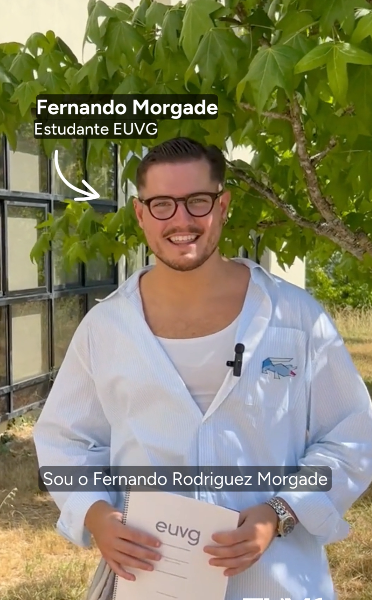
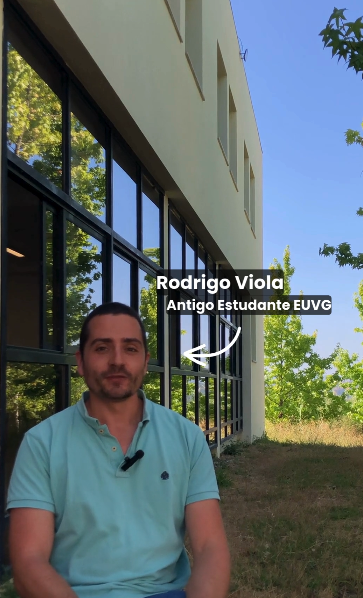
What Our Students Say

How can we help you?
Shopping cart0
O seu carrinho está vazio.

Mission

EUVG’s mission is to educate outstanding professionals, equipped with the ability to adapt to change and to play a decisive role in social development. EUVG also aims to promote actions that support research and the dissemination of scientific knowledge, grounded in principles and values of sustainability.

Vision

EUVG aims to establish itself as a nationally and internationally recognised reference institution in Veterinary Sciences education; to be acknowledged for its academic excellence and for its distinctive positioning centred on the One Health concept. It also seeks to respond unequivocally to the challenges presented by society.

Values

EUVG’s values constitute the ethical and cultural foundation of the Institution, guiding the actions of the entire academic community and defining the standards of conduct that underpin its mission and vision.


EUVG is guided by rigour and quality in teaching and research, by the continuous pursuit of excellence, by ethical and responsible conduct, by the promotion of innovation and creativity, and by a close and cooperative relationship with the community, based on synergistic partnerships with different stakeholders.


EUVG also assumes an unequivocal commitment to sustainability, promoting responsible practices that value people, animals, and the environment, actively contributing to the protection of the planet.

Board of Directors

Ferdinando de Freitas

President

Ana Varela

Vice-President

Rita Caseiro

Vice-President

Rui Rio Martins

Vice-President

Diana Valente

Secretary

Scientific Council

Maria Eduarda da Silveira

President

Anabela Almdeida

Vice-President

Diana Serra

Vice-President

Ana Catarina Figueira

Full Member

Ana Varela

Full Member

Diana Valente

Full Member

Elisabete Martins

Full Member

José Pimenta

Full Member

Liliana Montezinho

Full Member

Maria Carolina Bento

Full Member

Sérgio Eduardo de Sousa

Full Member

Sofia Anastácio

Full Member

Sofia Cancela Duarte

Full Member

Tiago Verdelhos

Full Member

Pedagocical Council

Sérgio Eduardo de Sousa

President and Faculty Representative of the Integrated Master’s in Veterinary Medicine

Sónia Luzia Claro de Pinho

Vice-President and Faculty Representative of the Bachelor’s Degree in Bioveterinary Sciences

Silvana Raquel Ferreira Guedes

Secretary and Faculty Representative of the Master’s in Small Animal Internal Medicine

Laurianne Wanda S.H. Desfrenes-Leduque

Student Representative of the Integrated Master’s in Veterinary Medicine

Hugo Fernandes da Cruz

Student Representative of the Bachelor’s Degree in Bioveterinary Sciences

Ana Rita Martelo Simões

Student Representative of the Master’s in Small Animal Internal Medicine

Department of Veterinary Sciences

Sofia Cancela Duarte

Director

Sofia Anastácio

Deputy Head

Ana Paiva

Secretary

Department of Biological and Environmental Sciences

Ludgero Tavares

Director

Myriam Kanoun-Boulé

Deputy Head

Struture

Liliana Montezinho

President

Rafael Lopes

Vice - President

Inês Crespo

Full Member

Mafalda leal

Full Member

José Pimenta

Full Member

Daniela Silva

Full Member

Fernando Esteves

Full Member

Strutura

Eduardo Costa

President

João Rito

Person in Charge of the Establishment

Tiago Gaspar

Responsible for the Supervision of Animal Welfare and Care

Alexandre Azevedo

Veterinarian

Diana Valente

Internal Scientific Officer

Elisabete Martins

Internal Member

Paulo Pinheiro

Internal Member

Message from the Student Ombudsman

Dear Students of Vasco da Gama University College,

Higher education, in all its dimensions, presents a series of challenges, but also a huge range of opportunities. EUVG is essentially its people, as well as its city, its society and its times.

It was EUVG that trained me as a veterinary surgeon. And how proud I am to say so! My memories of my student days, with all their ups and downs, are still fresh, but I also feel a sense of nostalgia for those times. A few years later, as a lecturer, I was delighted to accept the invitation to become Student Ombudsman. And what a challenge!

The Student Ombudsman is not administrative, is not binding, is not disciplinary, nor does it override any other body. However, its existence is important, and it is of particular interest in today’s society.

This body aims to be a link between the academic community, namely between EUVG students and their lecturers, non-teaching staff, academic bodies, directors, managers and administrators. Through this channel, the aim is to facilitate communication, with impartiality and rigour, where the interests of students are defended.

I have therefore decided to write to you in this more personal way. I am and will always be available to listen to you and help you. It is in my interest, as it is in everyone’s, to give you a greater voice.

Please send me your proposals, ideas, complaints or any other information, either individually or collectively. They will be treated with impartiality, professionalism and fairness, so that recommendations can be made to the School’s governing bodies, with a guaranteed response. The confidentiality of all processes will be guaranteed, if you so wish.

It is with your support that we can build stronger bridges, resolve conflicts, transform the challenges of each student into opportunities, and defend your interests and rights.

Whatever I can do to help, count on me!


Ana Luísa Pereira

How to get to EUVG - Car

  • GPS coordinates: 40.235111139621104, -8.416736713617313.
  • Our campus has more than 200 parking spaces.
      •  

How to get to EUVG - Plane

The airports closest to Coimbra are

  • Francisco Sá Carneiro Airport (Porto – 110 km) and
  • Humberto Delgado – Portela Airport (Lisbon – 210 km).

How to get to EUVG - Train

There are several national train services from major Portuguese cities such as Lisbon and Porto. International trains arriving from the Vilar Formoso border also reach the “Coimbra B / Estação Velha” railway terminal daily.


More information at CP (Comboios de Portugal).

How to get to EUVG - Long-distance buses

Regular coach services connect Coimbra with several cities and towns.Learn more at Rede Expressos and Flixbus

How to get to EUVG - Urban public transport

The main urban transport operator is SMTUC, which provides good coverage across the city. Students may apply for a monthly travel pass at SMTUC shops by presenting their enrollment certificate.The SMTUC bus lines operating near EUVG are 19, 19R, 19T, 27, and 28.Learn more at SMTUC

AgriTechEdu

The AgriTechEdu project aims to transform agricultural science education in Portugal through the intensive integration of digital and technological skills, funded by the Recovery and Resilience Plan (PRR) – Impulso Mais Digital programme: www.recuperarportugal.gov.pt

Main objectives:

  • Equip students, teachers, and professionals in agricultural sciences with essential digital skills.
  • Restructure curricula, including master’s degrees at the Instituto Superior de Agronomia (ISA-ULisboa), to better align them with technological and sustainability challenges. 
  • Promote continuous and specialised training, with courses for teachers and professionals, for example in data science, intelligent systems, robotics, phenological monitoring and Excel applied to agricultural sciences

Structure and partnerships

Coordinator University of Lisbon

Co-Coordinator: Vasco da Gama University School (EUVG-ACVG)

Implementing partners:

Higher Institute of Agronomy (ISA-UL)

Faculty of Veterinary Medicine (FMV-UL)

Other partners:

Higher Technical Institute (IST-UL)

Faculty of Sciences (FC-UL)

Clínica dos Bichinhos (Pet Clinic)

Promoted by the Coimbra City Council, through the Veterinary Medical Service, in partnership with EUVG and the Coimbra Higher Agricultural School (and respective student associations), this is an activity aimed at children aged 4 to 10, which aims to raise awareness of animal health and welfare through fun and educational experiences.

For one week, a mini veterinary clinic is set up, where each child takes on the role of carer for their pet (a soft toy, preferably a dog or cat), participating in simulated consultations and other basic care

Petlab

A space for promoting educational activities and raising awareness about animal welfare, run in partnership with UC Exploratório – Centro Ciência Viva da Universidade de Coimbra (University of Coimbra Science Centre).

The space will be run by EUVG specialists, focusing on topics such as companion animals, public health, wild animals, food safety and livestock production, with awareness-raising and educational activities aimed at families and schoolchildren.

VetTalks

On the fourth Wednesday of each month, there is a Vet Talks event at UC Exploratório, at 6 pm.

Vet Talks is a series of talks organised by EUVG in partnership with UC-Exploratório, as part of the PetLab Project. It is a dynamic space for sharing challenges, advances and impacts in animal health, research and collective well-being, bringing veterinary medicine closer to society.

Vet Talks allow for debate between the public, professionals and specialists, through the sharing of different perspectives on emerging topics such as pet health, the challenges of veterinary practice and scientific innovations in the sector.

Vet Talks are pet friendly, so you can bring your pet (assuming responsibility for its behaviour during the conversation).

Mercadinhos da Margem Esquerda

Every second Sunday of each month, Alameda do UC Exploratório welcomes EUVG to its PetLab – a yellow bus – where various activities and workshops are organised for children and adults, engaging them with science and the animal world in a practical and meaningful way.

Search