
bachelor's degree in
bioveterinary sciences
Sofia Anastácio, DVM PhD
Course Coordinator
Sofia Anastácio, DVM PhD
Course Coordinator
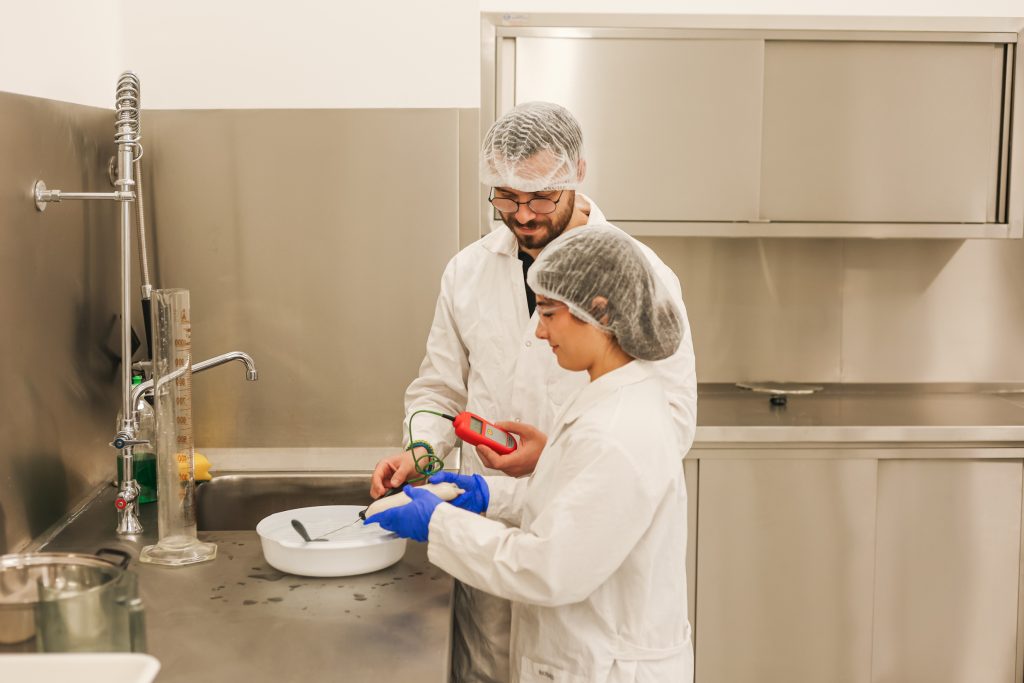
Bachelor’s Degree in Bioveterinary Sciences offers solid training in the areas of Biology, Animal Health and Research, combining theory and practice. With a comprehensive curriculum and a strong laboratory component, it prepares professionals to work in scientific research, clinical veterinary support and other sectors related to animal health and welfare.

3 years

16 Vacancies

ETCS 180

Schedule Daytime

Português
Request more information about the Bachelor's Degree in Bioveterinary Sciences.
Discover all the details about the Bachelor’s Degree in Bioveterinary Sciences, including the study plan, career opportunities, admission requirements and course structure.
Fill out the form to download the brochure and learn more about the programme.
1. Entry requirements
Institutional Access:
Specific Exams:
- 02 Biology and Geology (50%)
or
- 02 Biology and Geology (30%) + one of the following:
- 07 Physics and Chemistry (20%)
- 16 Mathematics (20%)
- 18 Portuguese (20%)
- 06 Philosophy (20%)
Grade of the lowest-ranked student in 2025/2026:
129.3 valores
Prerequisite:
Completion of Group A form – Interpersonal Communication
Calculation of application score:
Secondary School Average: 50% + Specific Exam scores: 50%
2. Career Opportunities
Bachelor’s Degree in Bioveterinary Sciences, although unique in the national educational offering, is widely available in the United Kingdom. It offers a comprehensive and multidisciplinary curriculum in the field of life and health sciences and is geared towards laboratory work in a wide range of research areas.
- Research Assistant at Universities and Innovation Centres
- Public Health and Epidemiology Technician
- Collaborator in the Pharmaceutical and Medical Devices Industry
Researcher in Biomedical and Veterinary Sciences
- Biotechnology and Bioinformatics Technician
- Biomedical/Veterinary Laboratory Technician
3. Curriculum Plan
| Code | Curricular Units – 1st semester | Scientific Area | ECTS |
|---|---|---|---|
| 01100012 | Morphophysiology | BVS | 7 |
| 01100023 | Bioinformatics | BSC | 5 |
| 01100034 | Chemistry and Biology | BSC | 6 |
| 01100040 | Laboratory Biosafety | BSC | 5 |
| 01100055 | Cellular and Molecular Biology | BSC | 7 |
| Code | Curricular Units – 2nd semester | Scientific Area | ECTS |
|---|---|---|---|
| 01100066 | Biophysics | BSC | 5 |
| 01100077 | Histotecnology | BSC | 7 |
| 01100088 | Clinical Biochemistry | BVS | 6 |
| 01100099 | Biomathematics Applied to Animal Research | BSC | 5 |
| 01100100 | Genetics and Immunology | BSC | 7 |
| Code | Curricular Units – 3rd semester | Scientific Area | ECTS |
|---|---|---|---|
| 01100111 | Microbiology | BSC | 6 |
| 01100122 | Animal Nutrition | BVS | 5 |
| 01100133 | Comparative Pathophysiology | BVS | 7 |
| 01100144 | Animal Behaviour and Welfare | BVS | 5 |
| 01100156 | Comparative Pharmacology and Toxicology | BVS | 7 |
| Code | Curricular Units – 4th semester | Scientific Area | ECTS |
|---|---|---|---|
| 01100167 | Infection and Public Health | BVS | 5 |
| 01100178 | Parasitology | BVS | 6 |
| 01100189 | Vivariums, Ethics and Law | BVS | 5 |
| 01100195 | Comparative Pathology | BVS | 7 |
| 01100204 | Comparative Semiology | BVS |
| Code | Curricular Units – 5th semester | Scientific Area | ECTS |
|---|---|---|---|
| 01100210 | Applied Biotechnologies | BVS | 6 |
| 01100221 | Tissue Analysis in Experimental Pathology | BVS | 6 |
| 01100232 | Experimental Models in vitro | BVS | 6 |
| 01100243 | Invertebrate Experimental Models | BVS | 6 |
| 01100257 | Vertebrate Experimental Models | BVS | 6 |
| Code | Curricular Units – 6th semester | Scientific Area | ECTS |
|---|---|---|---|
| 01100268 | Experimental Surgery Techniques and Thanatology | CBV | 6 |
| 01100279 | Non-biological Experimental Models | BVS | 5 |
| 01100285 | Experimental Clinic Pathology | BVS | 5 |
| 01100296 | Experimental Oncology | BVS | 5 |
| 01100303 | Experimental Research Project | MUL | 9 |
4. Learning Objetives
- Train professionals to promote animal health and welfare, with a solid technical-scientific and laboratory practice foundation.
- Develop in vitro and in vivo research skills applied to veterinary and human medicine.
- Ensure mastery of legal, ethical and bioethical standards in animals experimentation, with rigour in data collection and analysis.
- Encourage critical thinking, effective communication and teamwork, promoting continuous learning.
5. Teaching and Learning Methodologies
- Theory–Practice Integration
Combination of a solid scientific education with practical activities, whenever possible on-site and hands-on, promoting the application of knowledge in real-world contexts.
- Practice-Oriented Learning
Development of competencies aligned with the demands of the biotechnology sector, which is innovative and constantly evolving.
- Contact with Research and Development (R&D)
Involvement of students in research and development activities, supported by a network of institutional partnerships.
- Dynamic and Interactive Teaching
Theoretical and practical sessions delivered in a participatory manner, encouraging critical understanding of scientific concepts.
- Adaptation to Different Learning Styles
Flexible methodologies that consider the diversity of learning paces and styles, with close guidance and continuous interaction between instructors and students.
- Continuous Integration of Theoretical and Practical Content
Ensuring that theoretical principles are reinforced through their application in concrete practical situations.
- Monitoring and Continuous Improvement
Regular evaluation of the effectiveness of teaching methodologies through pedagogical surveys, semester reports, coordination meetings, and oversight by the Course Council and the Pedagogical Council, promoting identification of best practices and continuous improvement of the teaching–learning process.
6. Learning Assessment
Conducted in accordance with the learning objectives of each curricular unit (CU).
Considers the three dimensions of knowledge:
- Knowing (cognitive)
- Knowing how to do (psychomotor)
- Knowing how to be (socio-affective)
Each Curricular Unit Sheet (CUS) is periodically reviewed by the management of the Department of Veterinary Sciences (DVS), with training in pedagogical practices and knowledge assessment.
It aims to ensure continuous alignment between content and assessment instruments.
The process is aligned with the methodology used to monitor teaching methodologies.
7. Employability
Graduates of 2021–2022, 17% found employment directly, while 75% pursued further studies in the field of veterinary sciences, reflecting a strong orientation toward academic continuity and professional development in the area.
8. National Accreditations & Records
National Classification of Education and Training Area: 640 Veterinary Sciences
Code: L111
Accreditation of Study Cycles | A3ES
Legal Order
Validity of accreditation: 6 years from 31/07/2021
Maximum number of admissions: 30
Qualification level: 6
Degree: Bachelor
9. Investment
400€/month
Tutition and Fees HERE
TESTIMONIALS
What Our Aumni Say
This degree has enormous potential to train future researchers and professionals in the scientific field. (…) The course units are well organized and allow students to acquire knowledge and skills in different areas, adequately preparing us for continuing studies or future professional experiences. Here are 3 words that describe the course well: interdisciplinary, sciences, and versatile.
Aaronne L., former BSc in Bioveterinary Sciences student
The strong point of this Bachelor’s degree is the personal investment and availability of our professors. They are always ready to support and help us. I learned a lot during these 3 years and I am extremely grateful to them for that!
Jane C., former BSc in Bioveterinary Sciences student
I really enjoyed this degree because I had different practical classes that helped me understand the theoretical content. This degree allowed me to gain knowledge in Biology, Genetics, laboratory safety standards, and more. I can say that the main positive aspect of this degree is the development of critical thinking through article analysis, oral presentations, and practical class experiments.
Marie A., former BSc in Bioveterinary Sciences student
the confirmation
that Euvg is the
ideal choice:
- Practice-oriented teaching
- High employability rate
- Modern facilities and state-of-the-art laboratories
- Strong links to the market and partner institutions
- A welcoming, close-knit academic environment
- Opportunities for research and innovation